
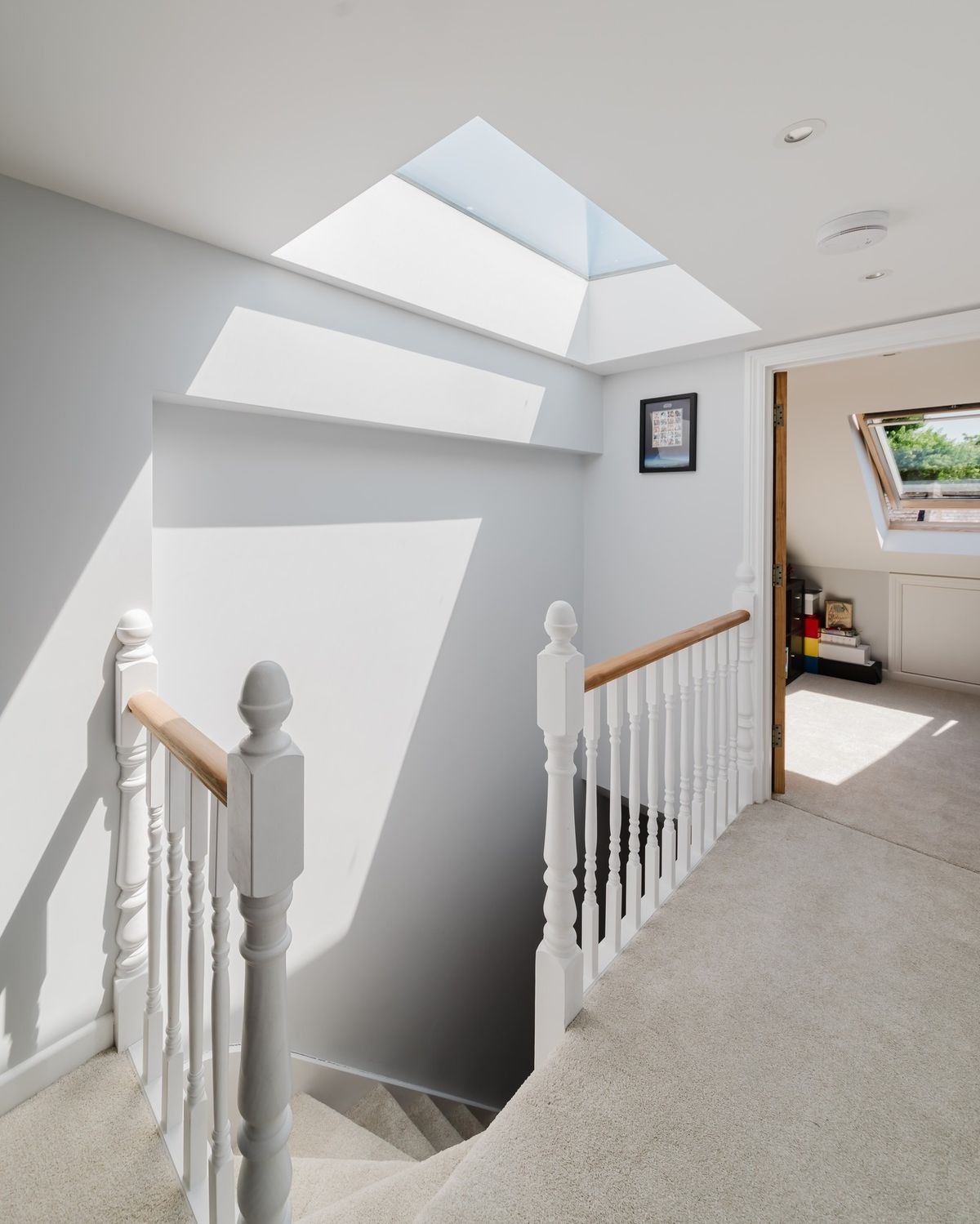
Adding skylights or roof windows can transform a space. Natural light from above makes rooms feel larger, brighter, and more inviting. It can turn a dark hallway into a feature space or bring daylight deep into a loft or kitchen. Yet these overhead windows require careful planning. Without proper attention to ventilation, shading, and glazing, the same sunlight that brightens a room can also lead to glare or unwanted heat gain.
This guide explains how venting skylights, shades, and glazing choices work together to provide comfort and efficiency. With the right combination, homeowners can enjoy the benefits of overhead light year-round without overheating or energy loss.
Understanding Skylights and Roof Windows
Although the two terms are often used interchangeably, there are key differences that affect performance and placement.
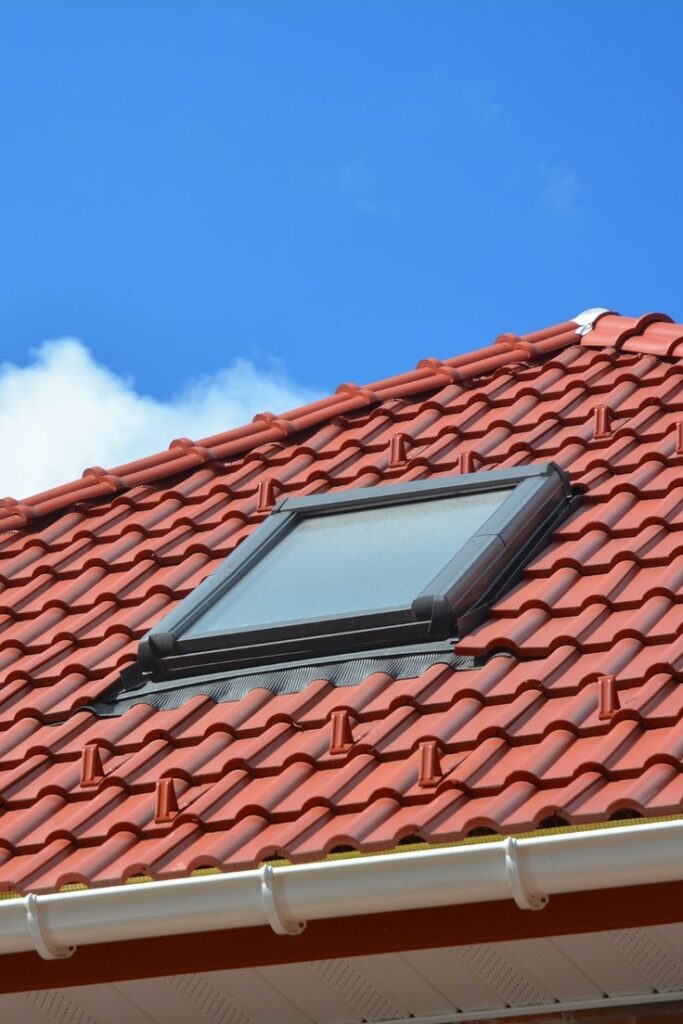
- Skylights: Installed high on a roof, skylights are primarily designed to bring light into spaces that lack wall windows. They can be fixed (non-opening) or venting (operable by remote or crank). Common configurations include curb-mounted, which sits on a raised frame, and deck-mounted, which installs flush with the roof surface.
- Roof Windows: These are larger, more accessible openings usually installed in sloped ceilings within reach, such as attics or loft conversions. Roof windows open like standard vertical windows and are often top-hung or centre-pivoted to provide both light and air circulation.
Both product types can be fixed or venting. Venting versions are especially useful for releasing hot, stale air trapped near ceilings and improving indoor air quality naturally.
Why These Choices Matter
Selecting the right skylight or roof window impacts more than appearance. It affects comfort, energy performance, and even indoor air quality.
- More Natural Light: Overhead light can deliver up to twice as much daylight as a wall-mounted window of the same size, reducing the need for electric lighting and improving mood and productivity.
- Better Air Circulation: Venting skylights are particularly useful in kitchens, bathrooms, and upper floors. They allow warm air and moisture to escape naturally, reducing humidity and odour buildup while supporting passive cooling in summer. High openings near the ceiling act like release points for built-up heat, which is a core principle of natural ventilation design in homes and small buildings (You can learn more at the following link: Whole Building Design Guide).
- A Sense of Space: Light from above enhances depth perception and can make compact rooms feel open and connected to the outdoors.
- Energy and Heat Management: Without the right glazing or shading, skylights can become a source of unwanted solar gain in summer or heat loss in winter. Windows, doors, and skylights can account for a significant share of a home’s total heat loss in cold climates, so controlling that flow of heat is critical for comfort and efficiency (Learn more about this at the Government of Canada). Energy-efficient glass and shades help stabilize indoor temperature throughout the year.
Comparing Light and Air Management Options
| Feature | Fixed Skylight | Venting Skylight |
| Function | Brings in natural light only | Adds light and adjustable ventilation |
| Air Leakage Potential | Minimal | Slightly higher due to operable components |
| Cost | Lower | Higher (due to mechanism) |
| Best Use | Hallways, stairwells, accent lighting | Kitchens, bathrooms, lofts, or rooms that overheat |
Shade Options for Skylights
| Parameter | Interior Shade (Roller, Cellular, Venetian) | Exterior Shade (Awning, Roller Shutter) |
| Heat Gain Control | Fair to Good (Blocks heat after it enters the glass) | Excellent (Blocks heat before it hits the glass) |
| Light Control | Good to Excellent | Good to Excellent (Can offer full blackout) |
| Cost | Lower | Higher |
| Installation | Easier (Inside the home) | More Complex (On the roof) |
| Maintenance | Lower (Protected indoors) | Higher (Exposed to weather) |
| Operation | Manual or Motorized | Often Motorized (Due to access) |
Key insight: Interior shades manage glare and privacy, while exterior shades deliver stronger heat protection by stopping sunlight before it enters.
Choosing the Right Skylight or Roof Window
Every home has different lighting and climate needs. The following steps help identify the right solution.
Step 1: Select Fixed or Venting
If your goal is simply to add natural light, a fixed skylight may be sufficient. For spaces prone to moisture or heat buildup, venting models are worth the investment. They also help freshen indoor air without relying solely on mechanical fans.
Step 2: Choose High-Performance Glazing
Energy-efficient glazing is the single most important factor for comfort.
- Low-E coatings reflect infrared heat while allowing daylight to pass through.
- Solar Heat Gain Coefficient (SHGC) measures how much solar heat enters. For most Canadian homes, an SHGC of 0.30 or lower prevents overheating in summer.
- U-factor measures heat loss; a low U-factor means better insulation for winter performance.
The U.S. Department of Energy notes that choosing skylights and roof windows with the right SHGC and U-factor is essential to reduce unwanted summer heat gain and winter heat loss, especially in sunny roof exposures (This information is taken from U.S. Department of Energy). Selecting models certified for your regional climate ensures balanced efficiency throughout the year.
Step 3: Plan for Shading
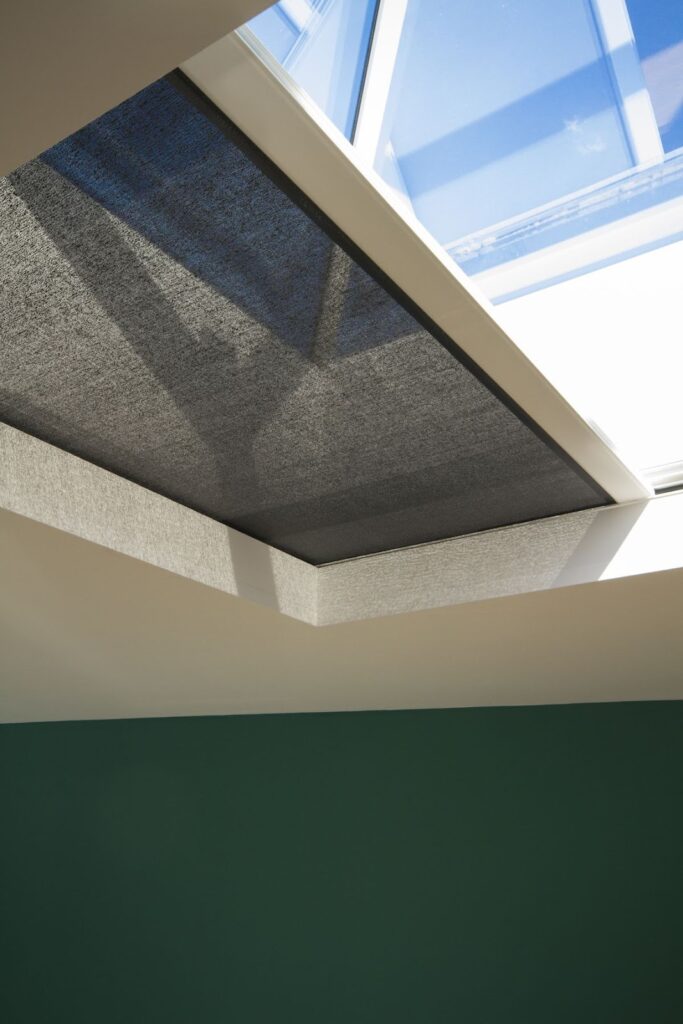
Include shades or blinds in your design from the start. Motorized interior roller or cellular shades make it easy to adjust brightness in hard-to-reach areas. Where sunlight is intense, exterior shades or awnings offer superior protection.
Step 4: Consider Placement and Orientation
The roof slope and direction determine how much light and heat the skylight will receive.
- North-facing provides consistent, soft daylight with minimal heat gain.
- East-facing captures morning light and remains cooler in the afternoon.
- South-facing delivers valuable winter warmth but requires shading in summer.
- West-facing brings strong afternoon sun and should use glass with low SHGC or external shading.
Step 5: Prioritize Professional Installation
Leaks and condensation are almost always caused by poor flashing or sealing. Always use manufacturer-approved flashing kits and a qualified installer familiar with your roof type.
Common Mistakes to Avoid
- Skipping Proper Flashing: Improper installation is the leading cause of leaks. Follow all manufacturer guidelines and insist on sealed, step-flashed integration with roof shingles.
- Overlooking Energy Ratings: A skylight with a high SHGC on a sunny roof slope can lead to overheating. Prioritize low-SHGC, ENERGY STAR-qualified glazing.
- Ignoring Shading Needs: Even small skylights can produce intense midday brightness. Shades or blinds should be considered standard equipment, not optional extras.
- Poor Placement: Avoid positioning skylights directly above screens, mirrors, or glossy surfaces where glare may reflect. Balance aesthetics with functionality.
The Case for Venting Models
While fixed skylights deliver pure daylight, venting versions add measurable comfort benefits. The ability to release trapped hot air supports natural cooling and humidity control. In bathrooms, they help prevent condensation on mirrors and walls. In kitchens, they exhaust steam and cooking odours without adding extra fans.
Motorized or remote-operated versions make operation simple, especially for high ceilings. For tighter budgets, fixed units remain an excellent choice for hallways, stairwells, or any room that simply needs light enhancement.
Frequently Asked Questions (FAQ)
1. What should I consider when choosing skylights & roof windows?
Key considerations include whether you need ventilation (fixed vs. venting), the energy efficiency of the glazing (Low-E coatings, SHGC, U-factor), the need for shades to control light and heat, proper placement on the roof, and ensuring high-quality, leak-proof installation.
2. How do I choose the best way to control heat gain?
The most effective way is to block the sun before it hits the glass using exterior shades or awnings. The second-best approach is choosing glazing with a very low Solar Heat Gain Coefficient (SHGC) and using high-performance interior shades like blackout cellular or roller shades.
3. What are the advantages and disadvantages of skylights/roof windows?
- Advantages: Abundant natural light, improved ventilation (venting models), enhanced feeling of spaciousness, potential for passive solar heating in winter (if designed carefully).
- Disadvantages: Potential for unwanted summer heat gain, winter heat loss if poorly insulated, risk of leaks if improperly installed, potential for glare, higher cost than vertical windows.
Conclusion

Skylights and roof windows bring both light and life to interior spaces. When thoughtfully designed, they reduce energy use, improve air circulation, and add architectural interest. The key is balancing brightness with temperature control.
Choose glazing with appropriate Low-E coatings and a low SHGC, include shading solutions from the beginning, and rely on professional installation to ensure durability. With these considerations in place, skylights and roof windows can provide all the beauty of daylight with none of the discomfort, helping you maintain a bright, comfortable, and energy-efficient home for years to come.